

Resource Hub
Pediatricians
Research-based guidance to help pediatricians identify early signs of reading difficulties and connect families with appropriate support.

Who This Is For
For pediatric healthcare professionals who want to support early literacy development, identify reading challenges sooner, and help improve outcomes for children.
Supporting Early Literacy Through Pediatric Care
Pediatricians are uniquely positioned to support early literacy development. They are a consistent and trusted point of contact for families. While the education field has made significant strides in embracing the science of reading—a vast, interdisciplinary body of research on how children learn to read—the same cannot yet be said for medical professionals. Pediatricians cannot be expected to become literacy experts, but a basic understanding of evidence-aligned practices, the risks of ineffective instruction, and how reading difficulties impact a child’s physical and mental well-being would enhance their ability to support whole-child health.
Providing pediatricians with foundational knowledge about how children develop language and literacy allows them to support children’s cognitive and academic growth. They can support caregivers’ abilities to provide enriching language environments, recognize early signs of reading struggles, and access valuable resources.
There is a strong correlation between academic achievement and mental health. Pediatricians have an ideal opportunity to reduce disparities in school readiness and associated academic and behavioral challenges. Embedding literacy support into routine pediatric care—through anticipatory guidance or early intervention referrals—ensures that children receive the support they need.
Pediatricians can:
- Display The Reading League’s flyer in their offices: The Reading League’s Five Recommendations to Help Your Child Become a Future Reader
- Display and distribute conversation starters (coming soon) between caregivers and children, and encourage local businesses to do the same
- Share literacy milestones and parent recommendations: Developmental Language and Literacy Milestones and Resources
- Promote a literacy day in their towns or local hospitals alongside local experts, which could include experts from their state’s Reading League Chapter
- Create communication partnerships with local school districts to support a literacy and mental health connection
Transforming to Align With the Science of Reading: Important Considerations

Recommended Starting Points
Explore these foundational resources to better understand how children develop language and literacy, the impact of reading difficulties on overall well-being, and the important role pediatricians can play in supporting early literacy development.

American Academy of Pediatrics Technical Report

American Academy of Pediatrics Literacy Promotion: An Essential Component of Primary Care Pediatric Practice: Policy Statement

Science of Reading: Defining Guide
Defining Guide Video Series: A Call to Action for Pediatricians from Dr. Anson Koshy
Developing Early Literacy: Report of the National Early Literacy Panel
Explore Resources
Talk, Read, and Take Turns
The research behind conversational turns and read-alouds, and how pediatricians can nudge families toward language-rich time over screens.
Why Decoding Matters
What pediatricians should know about how children actually learn to read words, and why the widespread three-cueing method fails kids.
Don’t Wait to Fail
Why early intervention beats the wait-to-fail model, with research pediatricians can hand to families whose schools say wait and see.
Recognizing Dyslexia and DLD
The two skill sets reading requires, the signs a child may have dyslexia or DLD, and the quadrant model that connects them.
Pre-Screening Signs to Watch
Three early indicators pediatricians can pre-screen for dyslexia and DLD, plus TRL's well-child information sheet to share with families.
Milestones From Birth to Teens
Age-by-age language and literacy milestones with caregiver questions and TRL tip sheets, from first babbles through middle school.
Questions to Ask About Instruction
Ready-to-use questions for pediatricians and parents to find out whether a child's reading instruction follows the evidence, by age band.
Literacy and Mental Health
The research linking reading difficulty with anxiety, low self-esteem, and behavior challenges, and why early help interrupts the cycle.
ROAR at Home
Stanford's free, gamified reading assessment that families can run at home, with score reports you can share with a clinician.
More for Pediatricians
Two more finds: NCIL's guidance on emergent literacy screening during well visits, and AP's report on a hospital screening reading ability.
No resources match those filters.

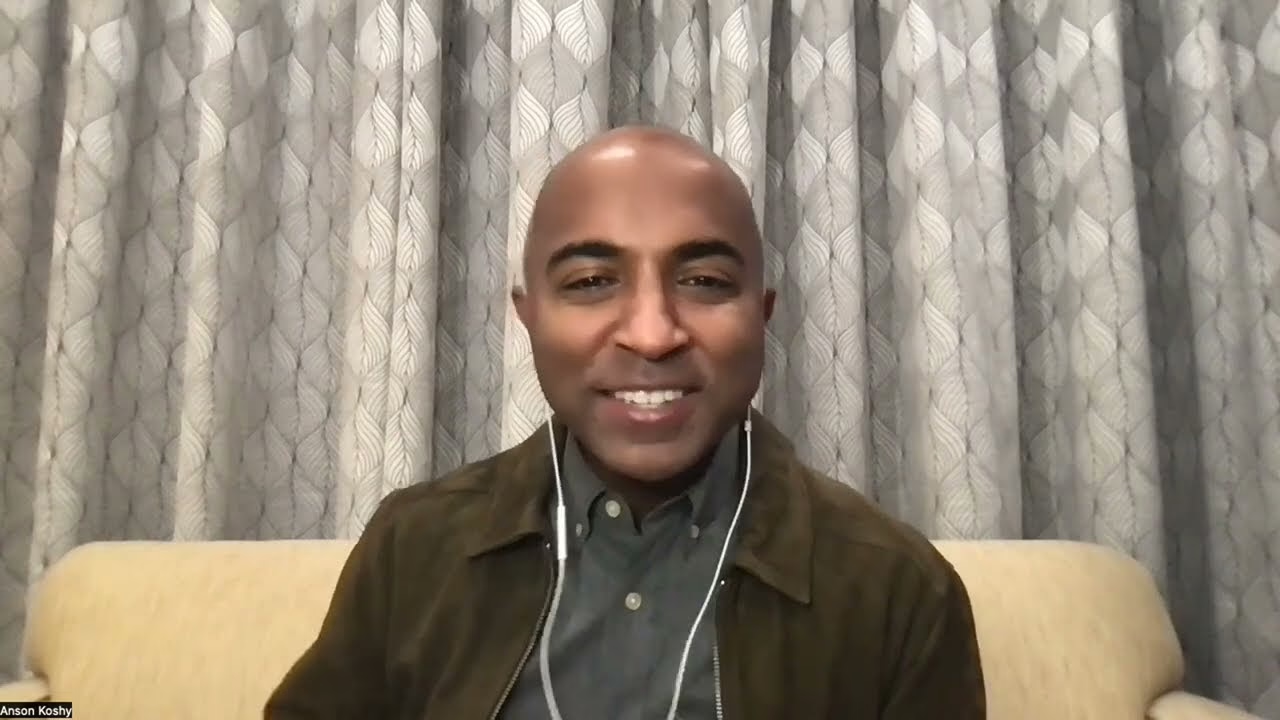
A Call to Action for Pediatricians
from Dr. Anson Koshy
About This Role
The Pediatricians pathway serves as a bridge between healthcare and literacy development within The Reading League Compass. It equips pediatric professionals with the knowledge and resources needed to identify concerns early, guide families toward appropriate support, and contribute to stronger reading outcomes for children.
Stories from the Field

