
Resource Hub
Adolescent Literacy
A school-wide approach to instruction and intervention that helps older readers close the gaps and access grade-level content.

Who This Is For
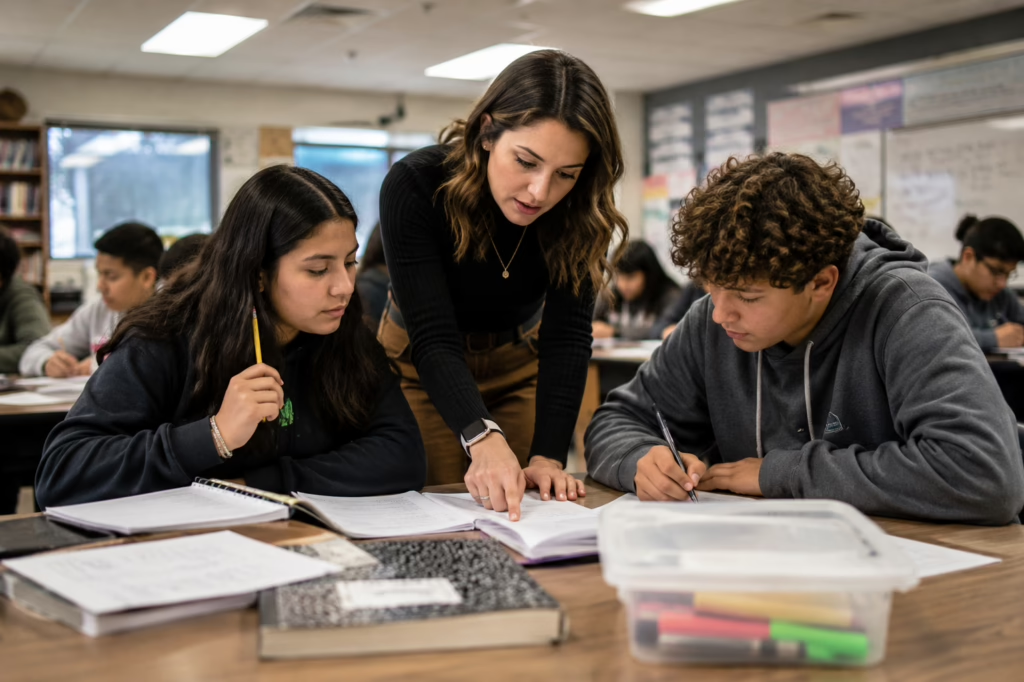
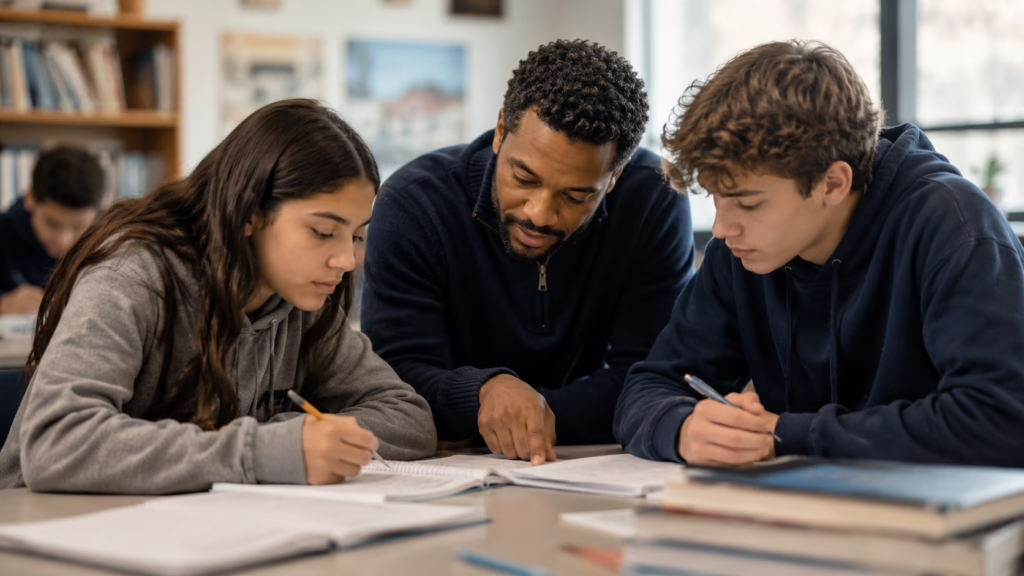
Educators and leaders supporting readers in grades 4 through 12. Content-area and ELA teachers, interventionists, special educators, coaches, and administrators working with adolescents who are still developing reading and writing skills.
Improving Literacy Outcomes for Adolescent Students
Adolescent students often struggle with reading due to weak foundational literacy skills (phonemic awareness, phonics, fluency), limited vocabulary, and limited exposure to complex texts. Missed early instruction and socioeconomic barriers that limit access to quality materials worsen these gaps, making grade‑level academic and everyday reading increasingly difficult.
To address these challenges, evidence-aligned intervention must be implemented as a comprehensive, school-wide effort across all tiers of instruction.
- Tier 1: high-quality, evidence-aligned reading instruction for all students within the main classroom, focusing on advanced word study, vocabulary, fluency, and comprehension
- Tier 2: high-quality, evidence-aligned supplemental and targeted intervention featuring small group instruction and individualized learning plans
- Tier 3: more intensive, high-quality, evidence-aligned, individualized interventions for those with the most significant reading difficulties
The school community—interventionists, general educators, special educators, and administrators—must all be committed to closing the literacy gap. By leveraging evidence-based practices across all tiers of instruction, schools can ensure that adolescent students receive the support they need, enabling them to become literate and successful members of society.
Transforming to Align With the Science of Reading: Important Considerations

Recommended Starting Points
Explore these foundational resources to better understand adolescent literacy, evidence-aligned intervention, and the systems needed to support struggling readers across all tiers of instruction.

Turning the Page to Secondary Literacy: Marshall Street
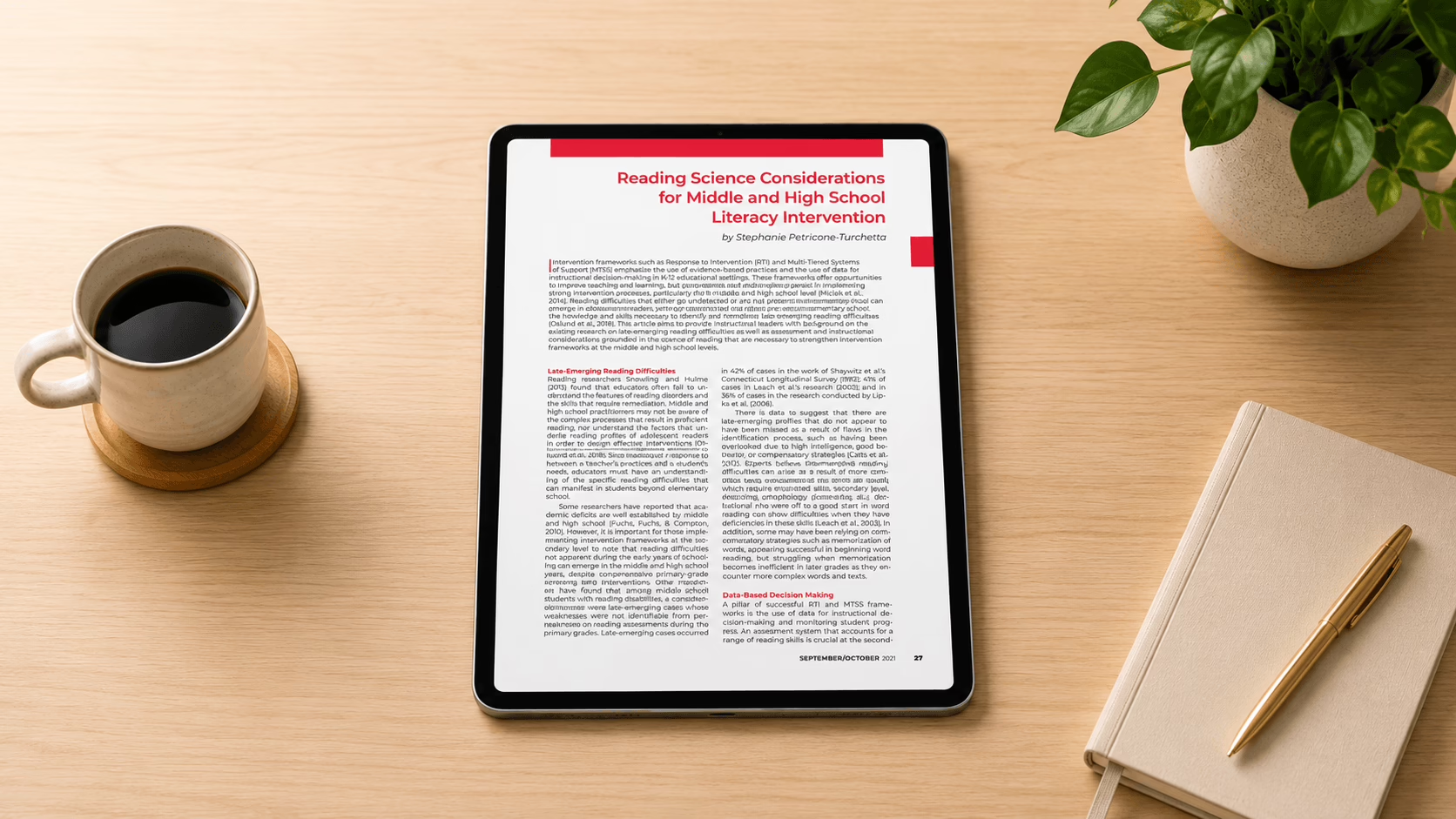
Reading Science Considerations for Middle and High School Interventions: The Reading League Journal

Resources for Improving Low Literacy Levels in Adolescents

Teaching Adolescents to Read: It’s Not Too Late

Adolescent Literacy: A Guide


Explore Resources
Teaching Older Striving Readers
High expectations and engagement come first. Five practical guides on effective instruction for adolescents still building reading skills.
MTSS in Secondary Schools
What a well-built MTSS looks like in middle and high school, with five webinars and videos on supporting older striving readers.
Tiers of Instruction
Why consistent routines across classes lighten students' cognitive load, and when disciplinary literacy isn't enough without foundational skills.
Choosing Adolescent Interventions
An assessment flowchart and a selection tool for matching interventions to adolescents' needs, from foundational skills to grade-level access.
Intervention Evaluation Guidelines
TRL's evaluation guidelines for grades 4-12 reading interventions, developed with leading researchers in adolescent literacy. Download the PDF.
Decoding for Older Readers
Eight resources on building accurate, automatic decoding in adolescents, from multisyllabic word routines to decodables for older readers.
When Decoding Isn’t the Problem
How to support students who read words accurately but struggle to comprehend: assess language skills and screen for developmental language disorder.
Adolescent Multilingual Learners
Specialized language support for adolescent EL/EB students, with guides on academic vocabulary and treating home language as an asset.
IES Guides and Reports
Five expert-reviewed IES practice guides on adolescent reading intervention, secondary writing instruction, and what works for struggling readers.
Project for Adolescent Literacy (PAL)
An educator-built project spotlighting older striving readers, gathering what works, and telling success stories. Phase I report included.
State Education Agency Guides
Seven standout state resources on adolescent literacy, from Alabama's secondary reading initiative to Oregon's framework and CALI Reads.
CORE Learning Library
Webinars and blogs from CORE Learning on adolescent literacy, including reading science denial, grades 4-12 assessment, and reader triage.
Keys to Literacy Library
Sixteen free webinars, blogs, and articles for grades 5-12, from sentence combining and text structure to executive function.
Vocabulary and Comprehension
Vocabulary-building strategies and comprehension routines for content-area classrooms, from the Clarifying Routine to Achieve the Core's Academic Word Finder.
Syntax and Writing
Sentence-level instruction and writing strategies for older students, from the Syntax Project's scope and sequence to The Writing Revolution.
Morphology
Word-part instruction for decoding and vocabulary, including morpheme frequency research and a printable morphology flashcard set.
Background Knowledge
Building the knowledge base adolescent readers need for complex texts, from Achieve the Core's Text Set Project to a Gettysburg Address close-reading example.
Additional Resources
Eight more finds: adolescent literacy policy wins, a free assessment tool, secondary structured literacy sites, and a RAND report.
No resources match those filters.
About This Role
Middle and high school often assume students already read fluently, but many still need instruction in foundational skills before disciplinary literacy strategies can take hold. Closing that gap takes a coordinated, school-wide effort across all tiers, with high expectations held the whole way. This page gathers the research, intervention guidance, and classroom resources to support older readers, from decoding to vocabulary, syntax, and comprehension.
Stories from the Field
What Has Worked and What We Have Learned
The following experiences were shared by educators and leaders implementing successful literacy initiatives in middle and high schools.