

State Education Policies
Policymakers and State Education Agencies
Explore state-level policy adoption, guidance, and practices related to the science of reading.

Advancing Literacy Outcomes Through Evidence-Aligned Policy
Legislation is a necessary catalyst for change in our schools. Policies designed to promote awareness, understanding, and the use of practices aligned with the science of reading have the potential to improve student literacy and life outcomes. In states with local control, the potential for legislation to leverage, incentivize, and inspire change that will result in improved outcomes is even greater.
Policymakers and state education agents must keep in mind that the term “science of reading” has become so popular and widespread that it is often misused and oversimplified. There’s a real risk that it may be misunderstood to the point that legislation designed to improve student literacy fails. For proof that findings from the science of reading can translate into new practices, an understanding of what the science of reading really means is critical. Leaders in policy and state education must ensure that decisions related to legislation, funding, policies, guidance, and implementation are properly aligned with the science of reading.
Recommended Starting Points
Explore these foundational resources to better understand how evidence-aligned policy, implementation, and systems change can improve literacy outcomes at the school, district, and state levels.

The Perfect Storm: Mississippi’s Momentum for Improving Reading Achievement
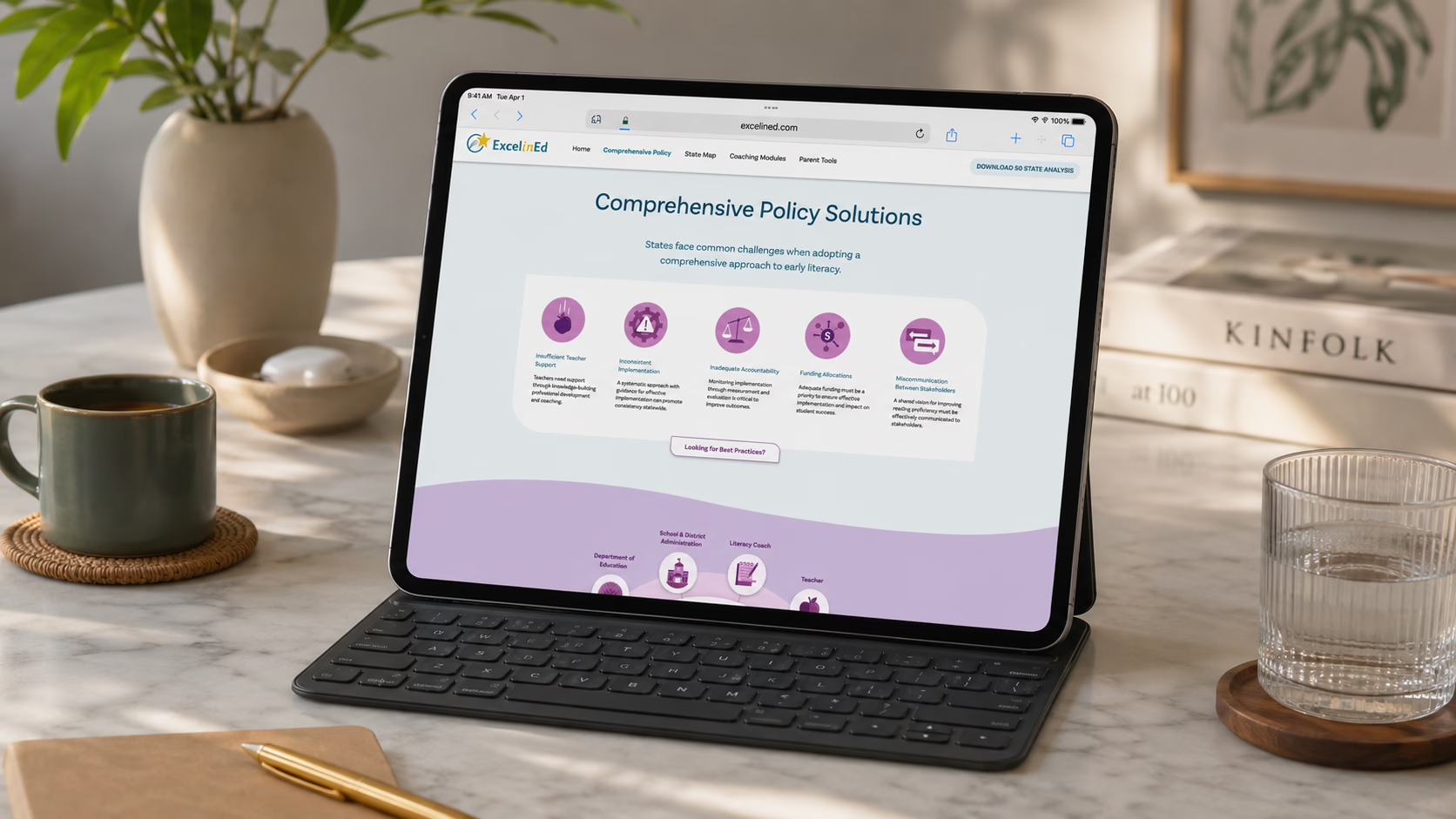
Comprehensive Policy Solutions
Interactive State Map
Use the interactive state map to find descriptions of state-level policy adoption, guidance, and practices related to the science of reading. State policy may include legislation incorporating training or practices related to the science of reading or state education agency guidance regarding policy, professional development, curricula, instruction, or assessment.
The Reading League expresses gratitude to our collaborators and associates within the state education agencies for sharing their state-specific data. This data will undergo semi-annual updates, contingent upon the availability and resources of the respective state agencies. For any inquiries, clarifications, or updates, please reach out to compass@thereadingleague.org.
Develop Knowledgeable Teams for Policy Development and Implementation
Legislation is introduced in numerous ways. Sometimes it is introduced without the expertise of reading scientists and/or without the guidance of educators and school leaders who will be affected by the legislation. When this happens, legislative policy can be weak and difficult to implement.
When designing legislation, consider assembling teams of experts that include people with knowledge and experience with the science of reading to ensure the purpose of the legislation is clearly articulated in the language. To avoid delays in legislation, convene roundtable discussions with key stakeholders in your state.
Ensure That Policy and Guidance Addresses All Aspects and Tiers of Instruction
In recent years, several states have passed and adopted policies that focus narrowly on one or two aspects of instruction. For example, several states have adopted legislation that bans instruction featuring cueing to identify unknown words. It is important to address aspects of instruction that interfere with skilled reading, but an “a la carte” approach to legislation will not result in improved literacy outcomes.
When writing legislation, be sure to address the following:
- teacher and leader professional development and knowledge building
- instructional materials for tier one (whole class instruction as well as interventions)
- assessment
- educator and administrator preparation content, licensing exams that align to the science of reading, and pre-service teacher placements in classrooms that use evidence-aligned instruction
- educator coaching and funding
- systems to support and sustain this work
It is also recommended to bring together divisions within a department of education to determine how policy related to the science of reading aligns with other initiatives (e.g., supporting English learners/emergent bilinguals, social-emotional learning, content-area instruction, secondary learning, multi-tiered systems of support, supporting students with disabilities). The more these initiatives are streamlined, the more likely educators responsible for implementing the policy will be able to avoid initiative overload.
Additionally, it is critical to consider educators’ needs across tiers of instruction so that all students receive consistent instruction in both their Tier 1 and intervention settings. If reading specialists and interventionists instruct students with reading difficulties using evidence-aligned instruction, yet the instruction in Tier I classroom settings features non-aligned practices, consider how the conflicting instruction might impact student achievement. Consideration must also be given to including policies that support multilingual learners, students with English language variations, and students with language-based learning differences.
The Path Forward
The Path Forward uses a cohort model to support states in transforming teacher preparation and licensure programs to incorporate the science of reading. Through virtual meetings and targeted coaching support, state teams build an understanding of their current context and develop a comprehensive action plan to embed the science of reading in teacher preparation. A national advisory group, a cadre of experts in reading, policy, and teacher preparation, serves as partners in the work by presenting to teams at meetings, providing resources, and offering feedback on state action plans. The Hunt Institute staff and coaches provide monthly coaching to support the teams in processing the information from the virtual meetings and engaging in state action planning.