

Resource Hub
Pre-K Educators and Leaders
Evidence-aligned strategies for building the oral language and early literacy foundations young children need, without losing the joy of play-based learning.

Who This Is For
Educators and leaders supporting children ages 3 through 5 in Pre-K classrooms. Pre-K teachers, instructional coaches, program directors, and curriculum leaders building the oral language and early literacy foundations children need before kindergarten.
Pre-K Educators
High-quality prekindergarten classrooms are places of joy, curiosity, creativity, and exploration. Decades of research support play-based learning environments that foster children’s social, emotional, physical, and cognitive development. Through play, children develop self-regulation, problem-solving skills, oral language, collaboration, and confidence. These experiences are not separate from learning—they are foundational to it.
At the same time, research consistently shows that early literacy development begins long before children enter kindergarten. Young children benefit when educators intentionally support the skills that serve as building blocks for later reading success. The report of the National Early Literacy Panel identified oral language, vocabulary, alphabet knowledge, phonological awareness, and print knowledge as important predictors of later reading achievement. The panel also found that these skills can be strengthened through intentional instruction and meaningful interactions during the preschool years.
Similarly, the Institute of Education Sciences practice guide, Preparing Young Children for School, highlights the importance of rich language experiences, conversation, vocabulary development, self-regulation, and developmentally appropriate early literacy instruction. The guide reinforces that academic learning and social-emotional development are complementary, not competing, priorities.
The evidence suggests that effective prekindergarten programs do not choose between play and learning—they integrate both. Children thrive when joyful, engaging experiences are paired with intentional opportunities to build oral language, listening comprehension, vocabulary, phonological awareness, background knowledge, and early understanding of print.
This balance is particularly important today. Many educators report that children are entering school with fewer opportunities for sustained conversation, shared reading, independent play, and attention-building experiences. Concerns about the effects of excessive screen exposure on language development and attention have heightened the need for intentional, interactive learning experiences.
As educators, families, and communities work together to support young children, we must continue to honor the whole child. Social-emotional development and joyful learning remain essential. Equally important is ensuring that children develop the language and early literacy foundations needed to thrive in elementary school. By grounding our work in evidence, we can create early learning environments that are both joyful and purposeful—preparing every child for future success as a reader and learner.

Recommended Starting Points
Explore these foundational resources to better understand the research behind early literacy development, school readiness, and what high-quality, evidence-aligned Pre-K instruction looks like in practice.
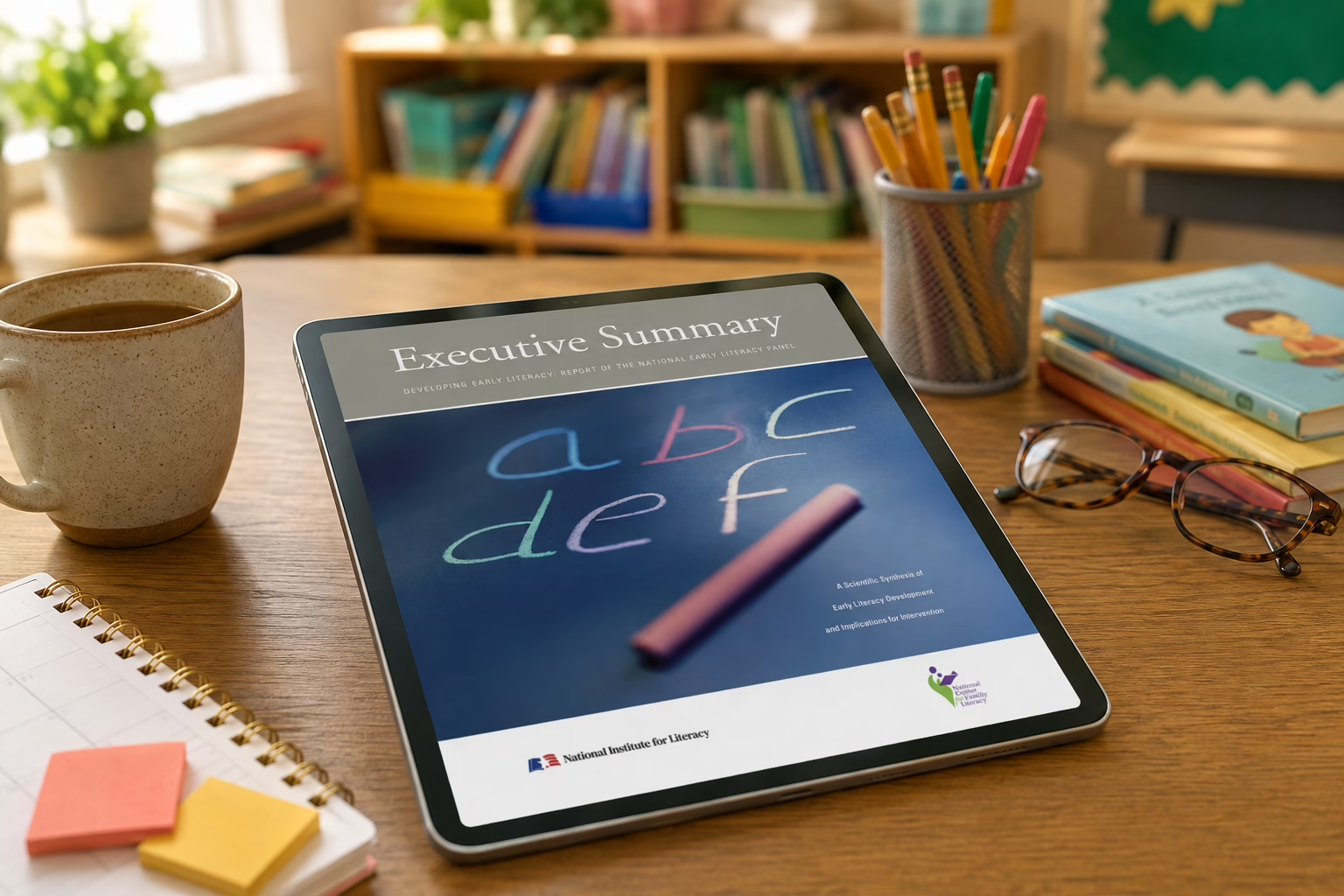
National Early Literacy Panel Executive Summary
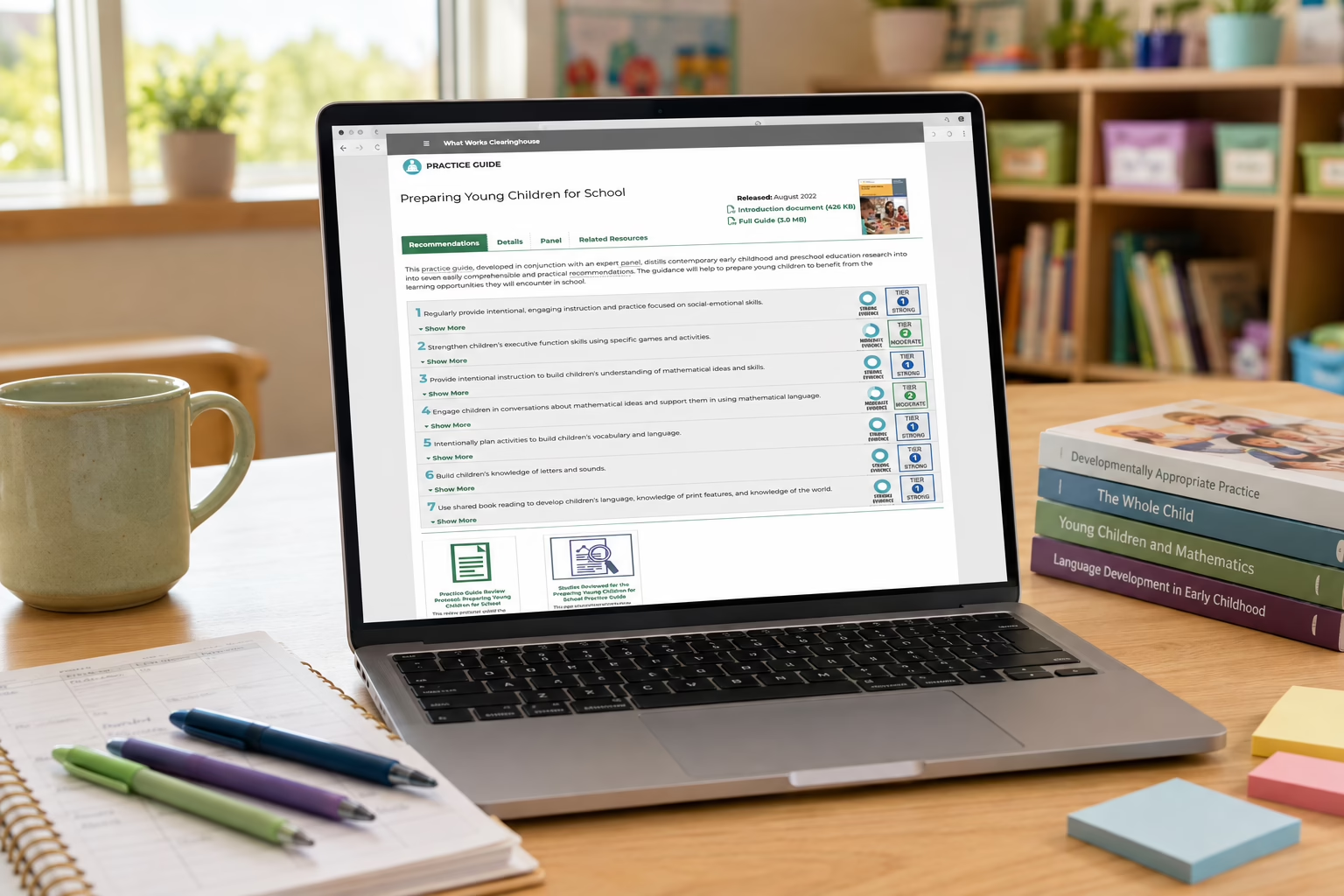
IES Practice Guide: Preparing Young Children for School
National Academies Report Promoting the Educational Success of Children and Youth Learning English: Promising Futures
Implementing a New Vision for High-Quality Preschool Curriculum

The Five Domains of School Readiness
Explore Resources
Oral Language
Oral language — the ability to speak, understand, and use words — is the foundation for learning to read. Explore why it matters and how it develops in Pre-K.
National Early Literacy Panel
An overview of the National Early Literacy Panel's findings on the instructional practices and interventions most effective for building early literacy skills in children birth through age 5.
National Educational Goals Panel (NEGP) and the Essential Foundations for Learning Checklist
Learn about the National Educational Goals Panel and its Essential Foundations for Learning checklist, which helped shape early learning standards used across the country.
Effectiveness of Early Literacy Instruction
A research review identifying which early childhood curricula, instructional practices, and technology programs are most effective for building strong early literacy skills.
Why Play?
Play is one of the five domains of educational readiness. Discover why play-based learning is a cornerstone of early literacy development in Pre-K.
Building and Screening Early Language
Why screening for oral language matters as early as age 3.5, plus practical tools and evidence-based programs for building strong oral language skills in Pre-K classrooms.
Connections Between Early Oral Language and Behavior
Strong early language skills help children regulate emotions and behavior. Explore the research connecting oral language development to self-regulation and behavior in young children.
English Learners
Guidance and resources for supporting Pre-K English Learners, including Multi-Tiered Systems of Support frameworks, oral language strategies, and tools for multilingual classrooms.
Dialogic Reading and Interactive Read Alouds
Dialogic reading turns read-alouds into interactive conversations, engaging children as storytellers to build language, comprehension, and a love of books.
Screen Use
Practical, research-based guidance for balancing screen time with language-rich, in-person interactions to support healthy development in young children.
Early Literacy Checklist by Lucy Hart Paulson
A checklist by Lucy Hart Paulson outlining the developmental progression of early literacy skills, giving educators a roadmap for recognizing typical growth from infancy on.
Student Achievement Partners
Student Achievement Partners' guidelines outline the essential, evidence-aligned components every high-quality Pre-K curriculum should include to support early language development.
The Emergent Literacy and Language Early Childhood Checklist for Teachers
The ELLECCT is an observational tool that helps Pre-K educators assess children's emergent literacy and language skills during shared book reading.
Resources From Nell Duke
Nell Duke's Essential Instructional Practices highlight research-based approaches for building strong language and literacy skills from birth through Pre-Kindergarten.
Reading Universe
A collection of skill explainers, interactive tools, and printable picture cards from Reading Universe covering rhyming, syllables, handwriting, and phonological awareness.
Early Language and Literacy Tip Sheets
One-page tip sheets from The Reading League, developed for pediatricians to share with families during well-child visits to support early language milestones.
Other Resources
A curated collection of additional early literacy resources for Pre-K educators and leaders, spanning research organizations, professional learning, curricula, and assessment tools.
No resources match those filters.


About This Role
Pre-K is often framed as a choice between joyful play and academic preparation, but research shows the two aren’t in competition — young children need both to thrive. Strong oral language, vocabulary, and early literacy instruction, delivered through intentional, play-based experiences, build the foundation children carry into kindergarten and beyond. This page gathers the research, evaluation guidelines, and classroom resources to support that balance, from oral language and early literacy screening to multilingual learners and screen time considerations.