

Resource Hub
English Learners & Emergent Bilinguals
What the science of reading tells us about teaching English learners and emergent bilinguals to read, and how to put it into practice.

Who This Is For
Educators and educational leaders supporting English learners and emergent bilinguals. Classroom teachers, specialists, coaches, and administrators putting evidence-aligned literacy instruction into practice for multilingual students.
Supporting English Learners and Emergent Bilinguals Through Evidence-Aligned Literacy Instruction
According to the United States Census Bureau, English learners/emergent bilinguals (ELs/EBs) are the fastest-growing population of students entering our schools. The term English Learner is the official designation given to children who speak a language other than English at home and who enter schools with limited English proficiency as measured by designated English proficiency assessments. Emergent Bilingual is a more asset-based and aspirational term, as students should continue to use and develop literacy in their home language alongside their language of instruction, leading to biliteracy.
According to the most recent data available, the number of ELs/EBs in U.S. schools continues to rise. In the 2021-2022 academic year, approximately 5.6 million ELs/EBs were enrolled in public schools across the country (U.S. Department of Education, 2022). This represents a significant portion of the student population, accounting for approximately 9.9% of all students in U.S. schools (National Center for Education Statistics, 2022). This data illustrates the ongoing increase in the number of ELs, highlighting the continued need for targeted support and evidence-based instructional practices to meet the unique needs of these students. As such, all schools need to understand what the research says about teaching ELs/EBs to read.
The understanding of reading development in students learning alphabetic and non-alphabetic languages is grounded in global research, contributing to the science of reading (leer en Español). Certain universally applicable findings have emerged from the work of scientists and researchers. For instance, it is well-known that in alphabetic languages, children must establish associations between speech sounds of their language and the corresponding letters in written form. It is also understood that all students must know the meanings of words to comprehend what they decode. These insights collectively contribute to our understanding of reading development across different linguistic systems.
The science of reading helps us understand the important role of explicit and systematic instruction to develop accurate and automatic word recognition, as well as the importance of binding those words to language. Despite this clear understanding, there are many nuances and questions to be answered about the time allocation for foundational skills instruction while ensuring adequate time to develop language comprehension skills to support understanding. It is, however, widely understood that skilled reading requires both word recognition and language comprehension for all students, with additional English language development to support comprehension for our EL/EB students.
Transforming to alignment with the science of reading: Important considerations

Recommended Starting Points
Explore these foundational resources to deepen your understanding of reading development, biliteracy, and evidence-aligned instructional practices that support English learners and emergent bilinguals.
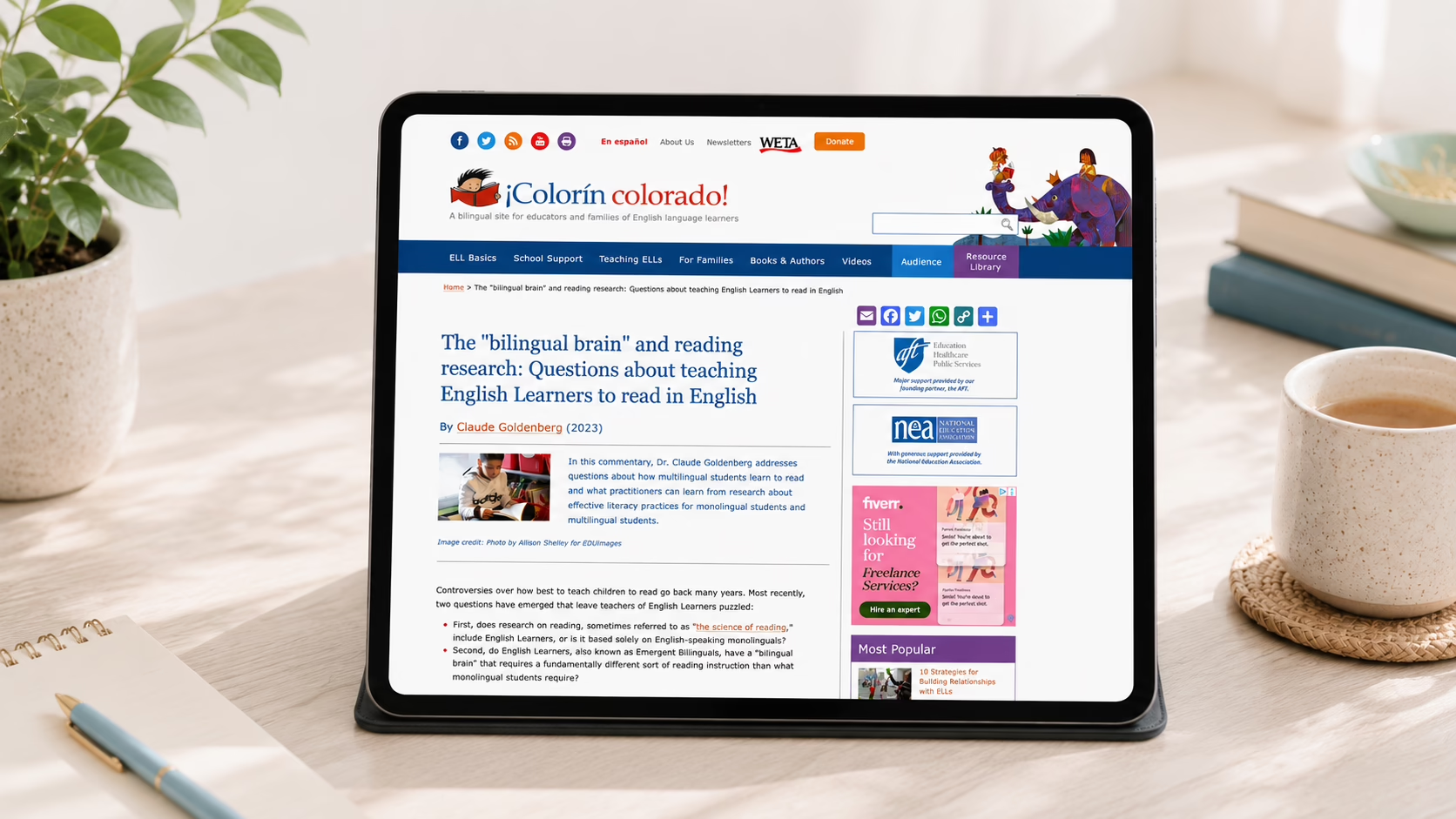
The “bilingual brain” and reading research: Questions about teaching English Learners to read in English
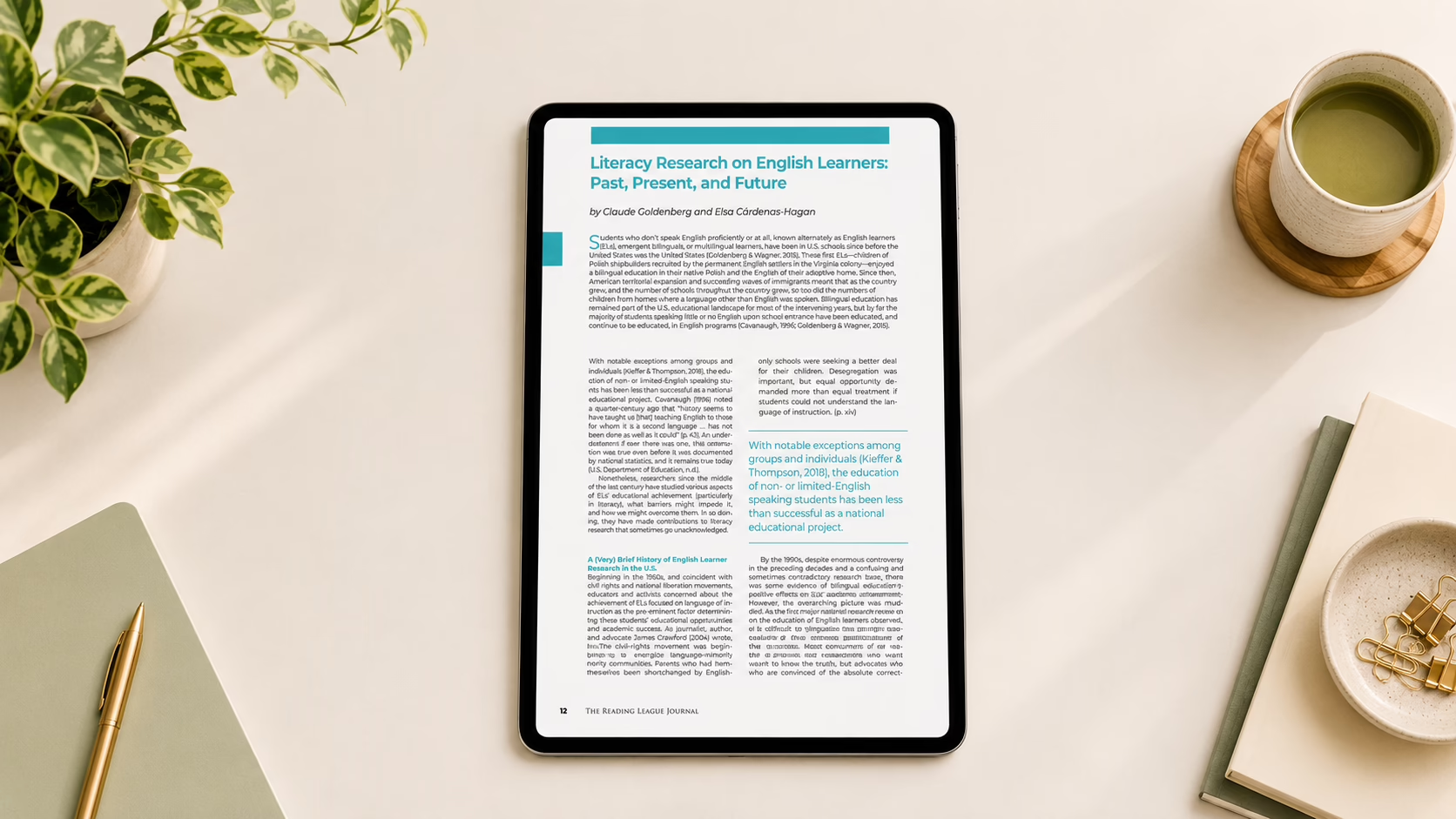
Literacy Research on English Learners: Past, Present, and Future
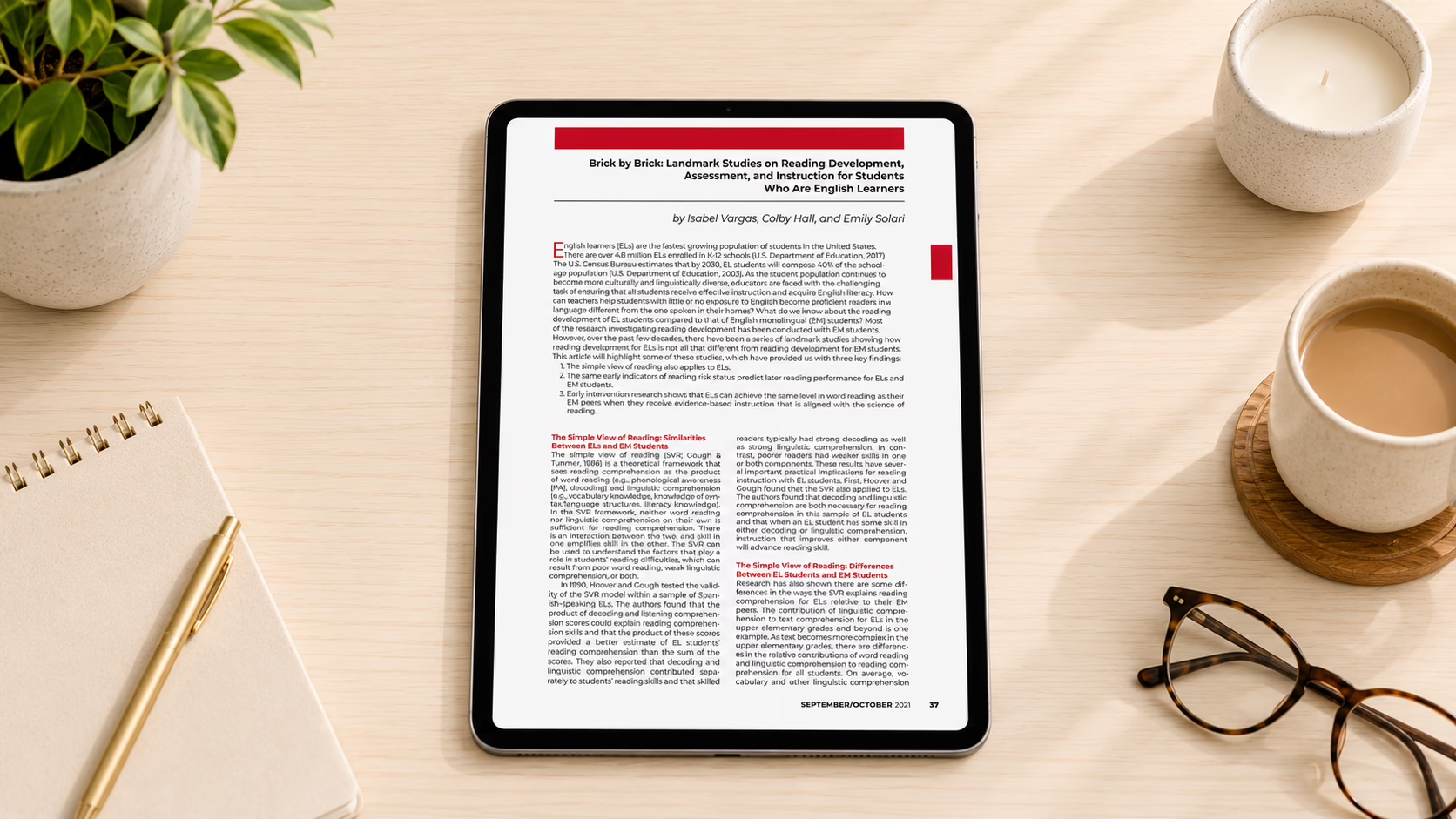
Brick by Brick: Landmark Studies on Reading Development, Assessment, and Instruction for Students Who Are English Learners
Explore Resources
Finding Common Ground on Reading
How science of reading and EL/EB experts moved from a public dispute to shared agreements, and the collaborative work that got them there.
Summit Talks and Joint Statement
Full video archives from the 2023 and 2024 Summits, the TRL and NCEL joint statement, and the report that captures the day.
The Research on EL/EB Readers
Evidence that the science of reading includes EL/EB students, with a study list spanning cross-language transfer to intervention trials.
Teaching Reading to EL/EB Students
Why foundational skills and rich oral language must work together for EL/EB students, with insight from Ehri, Brady, and the CEGs.
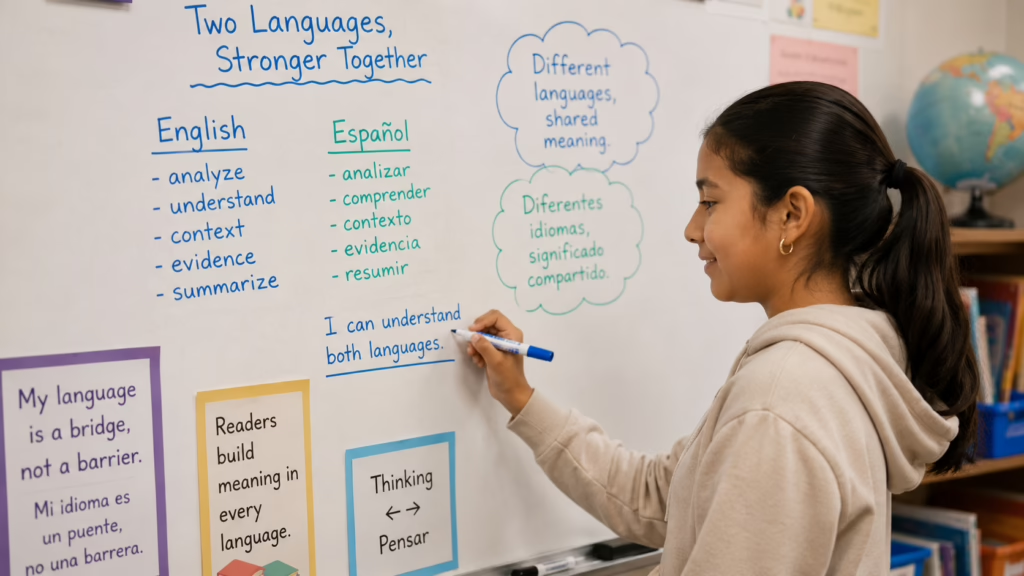
Multilingualism Is an Asset
The case for treating students' home languages as strengths, and how cognates and contrastive analysis put that asset to work in class.
Assessing Multilingual Readers
Dr. Lillian Duran on why assessing EL/EB students means looking at every language they know, and how to choose the right measures.
Include Black English Speakers
Dr. Altheria Caldera on why students who speak Black English belong in the multilingual learner conversation, and what dialect means for reading.
Contrastive Analysis
A downloadable comparison of consonant phonemes across six languages and English, built with Bilinguistics to inform instruction.
More EL/EB Resources
Eleven more resources on EL/EB literacy, from OELA fast facts and MTSS for ELs to Colorin Colorado and a Cardenas-Hagan podcast.
No resources match those filters.


About This Role
The science of reading applies to all learners, including multilingual students who are still developing English. Skilled reading always requires word recognition and language comprehension, with added attention to English language development along the way. This page gathers the research and resources to teach ELs and emergent bilinguals effectively, while treating their home language as an asset, not a barrier.
Stories from the Field
What Has Worked and What We Have Learned
The following experiences were shared by educators and leaders in schools who support a high population of ELs/EBs.
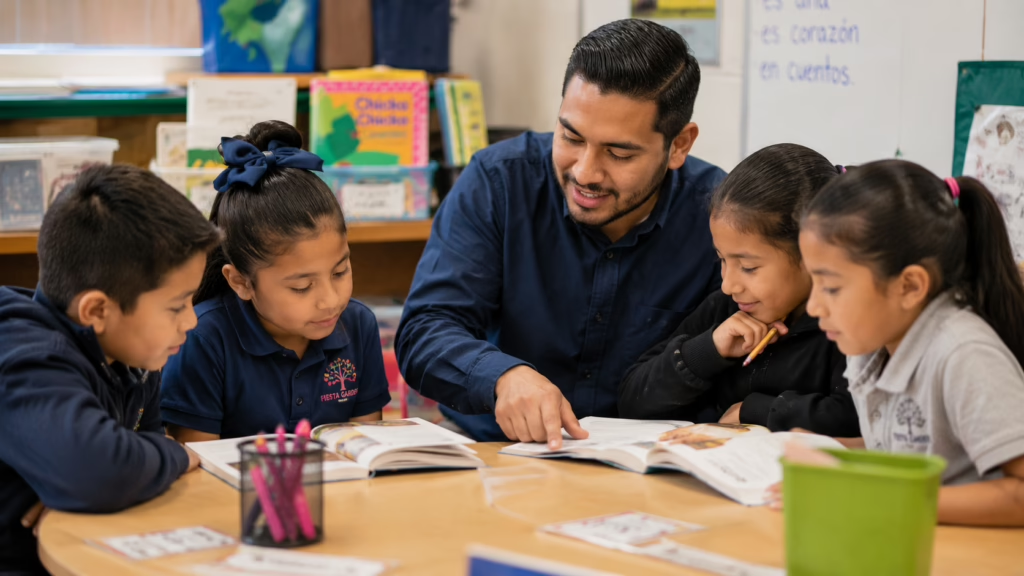
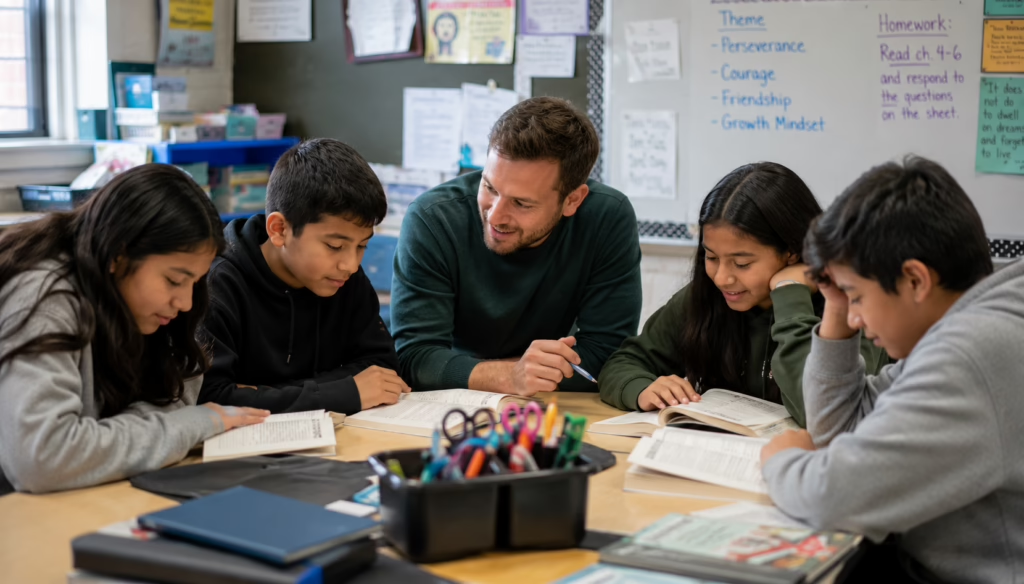
Empowering Success: Russellville City Schools’ Inspiring Journey to Boost Reading Skills Amidst Diversity
Join The Conversation
Join monthly online discussions with experts and peers focused on supporting English learners and emergent bilingual students.